 Iron CapitalTrailer Rentals
Safety guide
Towing in Colorado Wind and Winter: A Front Range Safety Checklist
Towing along the Front Range is a wind problem first and an ice problem second. Keep 10–15% of the loaded weight on the tongue, drop 10–15 mph off your normal highway speed in gusts, and re-check every strap 10 minutes into the drive. When CDOT posts a high-wind advisory for profile vehicles, an empty or lightly loaded trailer is the worst thing on the road — wait it out or load it heavier.
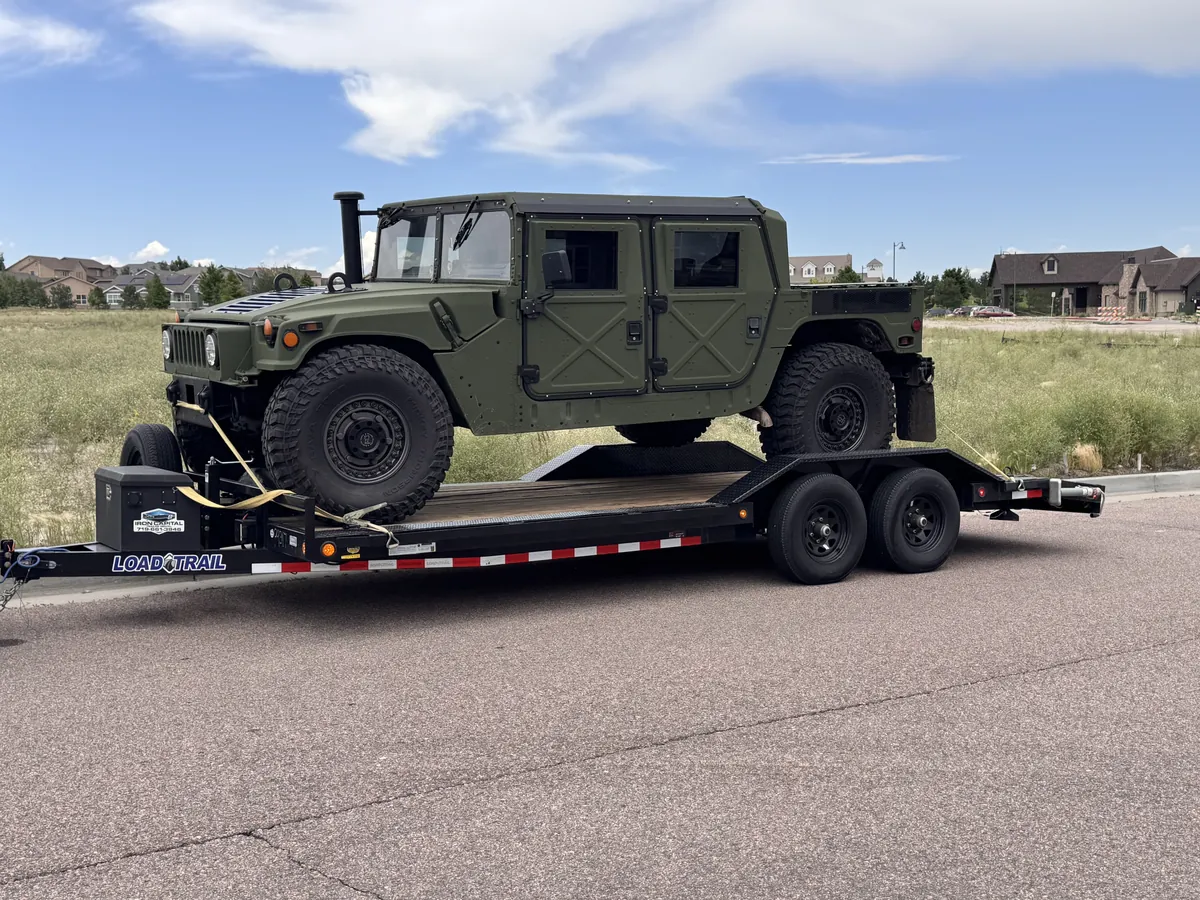
Why is wind the bigger danger on the Front Range?
Chinook winds pouring off the mountains hit the I-25 corridor and the plains east of Colorado Springs broadside, and a trailer is a sail. Gusts are strongest at ridge gaps, overpasses, and the open stretches toward Monument Hill and Pueblo. An empty enclosed trailer is the worst case — tall sides, no weight. Check CDOT road conditions before any trip; when they advise high-profile vehicles off the road, that includes you and your rental.
| Condition | What to do |
|---|---|
| Gusts 25–40 mph | Slow 10–15 mph below normal, hands at 9 and 3, expect a shove at every overpass gap |
| Gusts 40+ mph, empty trailer | Delay the trip or load heavy items low and centered to add ballast |
| Snow or ice on grades | Drop to 2nd/tow mode downhill, double following distance, no cruise control |
| Traction law active | Adequate tires or chains on the tow vehicle are your legal responsibility |
How should I load a trailer for gusty weather?
Put roughly 60% of cargo weight in the front half of the deck, centered over the axles, so 10–15% of the total rides on the tongue. Too little tongue weight is what makes trailers fishtail at speed. Strap every item to the rail — our rentals come with the winch, straps, and ramps included — and stop after the first 10 minutes to re-tension. Loads settle; straps loosen. That one stop prevents most of the trouble we ever hear about.
What changes when it snows?
Distance and patience. A loaded trailer can double your stopping distance on packed snow, so leave 6+ seconds behind traffic and brake early and gently — steady pressure, not stabs, especially on the downgrades into Ute Pass or south on I-25. Colorado's passenger traction law activates on storm days: your tow vehicle needs mud/snow-rated tires with adequate tread, or chains. If the plows aren't keeping up, neither should you — every trailer we rent can wait a day; call us and we'll work with your dates.
What we tell renters at the yard
We tow these same trailers up Ute Pass and down to Pueblo year-round, and the honest rule is: the load matters more than the driver's experience. A well-strapped, tongue-heavy load in wind is boring to tow; a loose, tail-heavy one is dangerous for anyone. If the forecast looks ugly for your dates, call or text 719-661-3946 — moving a pickup to the next clear morning costs nothing but a phone call.
What's the full pre-departure checklist?
- Hitch ball matches coupler size; coupler latched and pinned
- Safety chains crossed under the tongue; breakaway cable attached
- Lights checked: brake, turn, running; brake controller gain set for the load
- Tongue weight 10–15% of loaded weight; heavy items over the axles
- Every strap tensioned; re-check after 10 minutes on the road
- Tire pressure on trailer and tow vehicle; spare and jack aboard
- CDOT conditions checked for wind and traction advisories
New to towing? Start with the sizing guide on what trailer your move needs, browse the fleet, or book a utility or equipment trailer at bookings.
Quick answers before you book
How fast should I tow a trailer in Colorado wind?
In gusts of 25–40 mph, run 10–15 mph below your normal highway speed — 50–55 mph on I-25 instead of 65–75. Wind force grows with the square of your speed, so a modest slowdown cuts the shove at each gust dramatically. Above 40 mph gusts with a light load, delay the trip.
Do rental trailers come with winter equipment?
Every Iron Capital rental includes a winch, straps, and ramps at no charge, and trailer tires are maintained year-round. Chains for your tow vehicle, when Colorado's traction law is active, are the driver's responsibility — the law applies to the tow vehicle, not the trailer.
Is it safer to tow an empty or loaded trailer in wind?
A properly loaded trailer is more stable than an empty one. Weight low over the axles with 10–15% on the tongue keeps the trailer planted; an empty enclosed trailer catches the same wind with none of the ballast. If you must run empty in gusts, slow down further and expect movement.
Can I reschedule my rental if a storm hits?
Yes — call or text 719-661-3946 and we'll move your pickup to the next workable day. We're open seven days a week, and shifting a reservation beats towing through a ground blizzard on the Palmer Divide every time.